40 years have passed since the discovery of the cuprate High Temperature Superconductors (HTS), a scientific breakthrough that generated the expectation that widespread revolutionary technological applications were just around the corner. Even though that enormous initial enthusiasm was somewhat excessive, several applications have been successfully developed, although restricted to relatively small markets. The main technological milestone was the development, around the beginning of this century, of Coated Conductors (CC), based on HTS ReBa2Cu3O7 films grown on metal substrate tapes.  

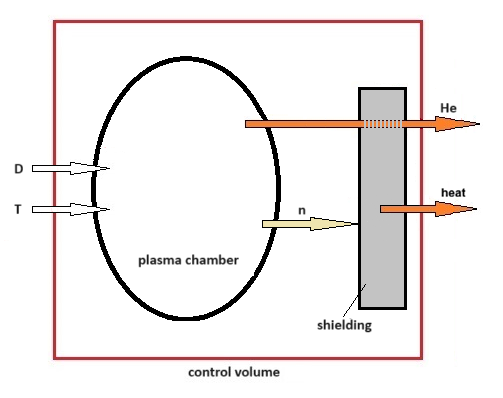
There is large optimism about a new and potentially huge market opportunity for CC, namely their use to fabricate the magnets for compact nuclear fusion reactors. The combination of requirements is ideally suited for them: operation at high magnetic fields (the power gain scales as B3) and high temperatures (to simplify the cryogenics), and large critical current density (Jc). There is, however, a caveat: the CC magnets will receive strong radiation generated in the reactor, and the resulting structural damage will sooner or later deteriorate the HTS films to the point that they will not be able to sustain the required Jc. The task in front of the CC-fusion community is to figure out whether existing CC would be able to survive during the decades-long lifespan of the reactor, or alternatively to find out how to modify them to achieve that goal. 

The study of particle irradiation effects in cuprate HTS was a topic of large interest in the early 1990s, in which I was personally involved. The purpose at the time was to increase Jc though the introduction of defects that act as pinning centers for superconducting vortices. Enormous progress in the understanding of vortex physics and pinning mechanisms was made through the irradiation of HTS single crystals with a variety of particles over a broad range of energies. In the case of YBa2Cu3O7, the overall conclusion was that irradiation could increase Jc by orders of magnitude. The interpretation of the results was simplified by the fact that the pristine crystals were very clean, with few pinning centers and quite low Jc, thus essentially all the pinning in the irradiated crystals could be attributed to the controllably added disorder. 

The case of the ReBa2Cu3O7 thin films and CC is more complex, because the pristine samples already have high Jc due to the presence of large densities of various types of defects, which are fabrication-method dependent, acting as strong pinning centers. The most popular and efficient method to further increase Jc in CC has been the introduction of artificial pinning centers (APC) by chemical incorporation of second phases, and efforts by many groups worldwide have demonstrated that a diversity of APC can be effective. These complex “pinning landscapes” result in Jc dependencies with temperature (T) and magnetic field (B) that are unique to each deposition method, to the APC nanoengineering, and to the processing parameters. Particle irradiation of CC produces additional defects that, in some cases, act as new pinning centers and initially increase Jc (by more modest factors than in the single crystals), but in all cases will produce a Jc deterioration at large enough doses. The understanding of this dual effect is complicated by the fact that the radiation-induced defects interact with the preexisting pinning landscape, thus the evolution of Jc(T,B) with dose (i.e., with reactor operation time) will be unique to each CC and each reactor design.  

In this talk I will describe the vortex pinning generated in YBCO single crystals and CC by defects of various geometries (aligned columnar, splayed columnar, randomly distributed nanoparticles, point defects) created either by particle irradiation, incorporation of second phases, or combinations of both routes. Then, I will summarize some of our still limited understanding of Jc deterioration at large doses. 


Relatore: Dr. Leonardo Civale


Conference information

Date/Time

Starts

Ends

All times are in Europe/Rome

Location

Frascati
Aula Bruno Brunelli - Edificio F23
ENEA C.R. Frascati Via Enrico Fermi 45 - Frascati

Extra information

Il corso si svolgerà esclusivamente in presenza presso la Sala Bruno Brunelli, dalle ore 9.30 alle 12.30 circa, e dà diritto a 3 ore di formazione.

Per accedere alla formazione è previsto un test iniziale di ammissione.
Prima di poter svolgere il test è necessario registrarsi al corso compilando il Modulo n. 1 – Iscrizione al corso. Per farlo occorre effettuare il login con le proprie credenziali INDICO (è possibile accedere anche utilizzando le credenziali ASIE).

Una volta completata la registrazione, potrai svolgere il test iniziale sempre accedendo alla piattaforma con le tue credenziali e cliccando su “Registrazione e test” → “Test iniziale”.

Il test finale si terrà al termine della giornata in aula e potrà essere svolto esclusivamente online.
Per completarlo potrai utilizzare il tuo computer portatile oppure il cellulare. In quest’ultimo caso, ti invitiamo ad assicurarti di ricordare le credenziali Indico ENEA, necessarie per effettuare l’accesso dal telefono.

Registration
Registration for this event is currently open.